
Autism is a spectrum, but some people are taking that spectrum and completely forgetting about it. April 2 is Autism Awareness Day, while the month entirely is meant for spreading awareness.
There are certain terms that are used among the community that were once seen as overly dramatic communication barriers. People with autism have been discriminated against for centuries, all the way back to when they didn’t even have a diagnosis for it. They were called childish, complicated, even abominations to mankind. Today, people on the spectrum still face the challenges of being bullied for something they can not control.
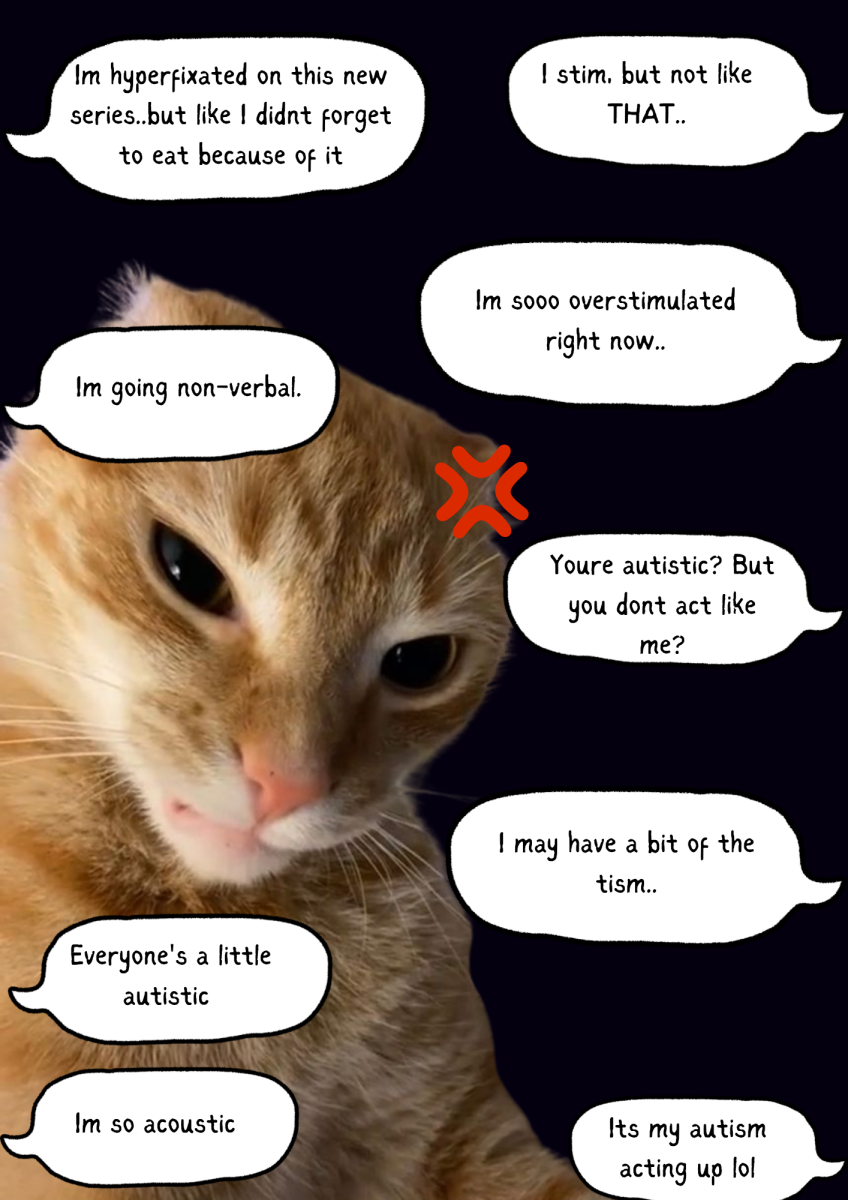
Some sayings have become popular on the internet, such as “stimming,” “overstimulated,” “non-verbal” and “hyperfixation.” These are all neurodivergent terms that neurotypical people have started to water down the severity of the real meanings. Neurotypical is the scientific term for people who have typical neurological development, in other words, not autistic.
Non autistic people now use them as if they’re everyday sayings. If they’re stressed out, they’ll result in saying “overstimulated.” When they’re talking about a hobby or something they really like they’ll consider it their “hyperfixation.” They may say they’re going “non-verbal” after a disagreement. Some of these have bigger meanings to them then people think.
Technically, everyone stims. It can be from bouncing your leg to fidgeting with something in your hands. But there is a major range for people with autism or ADHD. They can do it more frequently or even result in harm or stress.
In reality, the term overstimulated can in fact be used as a normal saying. “Overwhelmed” can be an understatement for when put in a situation that stresses you out. You can control what you do next, and walk away if you’re just overwhelmed. Being overstimulated can result in not being able to see a fix to an issue, therefore making you stuck. Neurotypical people can experience overstimulation.
There is a huge difference between a hyperfixation and a special interest. Special interests can be comforting and a joy to a person. While hyperfixation can lead to delayed tasks and even forgetting about basic needs, due to being locked in on a subject.
Going non-verbal doesn’t mean you’re giving the silent treatment. Silent treatment is actually considered emotional abuse and a way to manipulate or punish someone to get something you want. Being non-verbal is a way of communication. It can instead be substituted through facial expressions and body language. It can be healthy if given space and certain needs.
There is the issue with confronting people about using these terms so simply, since you can’t just look at someone and know if they’re on the spectrum or not. It’s not like everyone who uses these terms is going to prove their neurological condition to strangers. Not to mention, the spectrum is so wide anyone could be on it.
So is it harmful using these terms so casually?
Yes and no.
Some of these terms are related to other diagnosis like OCD and ADHD. About seven million kids have been diagnosed with ADHD. About 1 in 45 adults have autism. About a half of those people are undiagnosed, especially when it comes to women. It is considered harder to diagnose women because of ‘masking,’ or in other words being able to hide symptoms. This is caused by the history of medical studies being male centered, and only knowing how symptoms look on them.
Therefore, this means anyone could have ADHD, autism or any other neurological development that isn’t typical. It’s not necessarily harmful to talk about having a ‘hyperfixation’ or being ‘overstimulated’. It can however lead to other people being unrecognized for major episodes since these terms are being normalized. Which means they’re not checked on or given the help they need. So if we think about how we’re really feeling before putting a label on it, it could possibly save the true meanings of serious terms.