
Space may be something we are not capable of ever fully understanding.
No matter how far our eyes wander, how many tests we conduct and theories we develop, grasping the concept of infinity has proven too much, as has the idea that space, somewhere, somehow, could have an end. Regardless of how it operates, what we know is broken down into words that our minds can comprehend, equations that fit into our vision of structure, but they will never quite capture the true nature of how it works. To perceive something completely, you have to know how it is without the words.
This thought has no doubt crossed the minds of others, of billions throughout time, so why do we still look up? Why does humanity still yearn to know about that dark expanse when we have already figured out that actually understanding it is a myth?
Curiosity is a very powerful feeling. An unknown, such as space, is too tempting for us not to be mystified and it isn’t just theoretical; it shows up in real, tangible ways.
As someone with a long-standing interest in astronomy, this year gave me even more reasons to look up. My interest in the cosmos has grown through major moments like the release of “Project Hail Mary” and the Artemis II mission, but it was YouthAstroNet, a research program I joined, that drew me in the most.
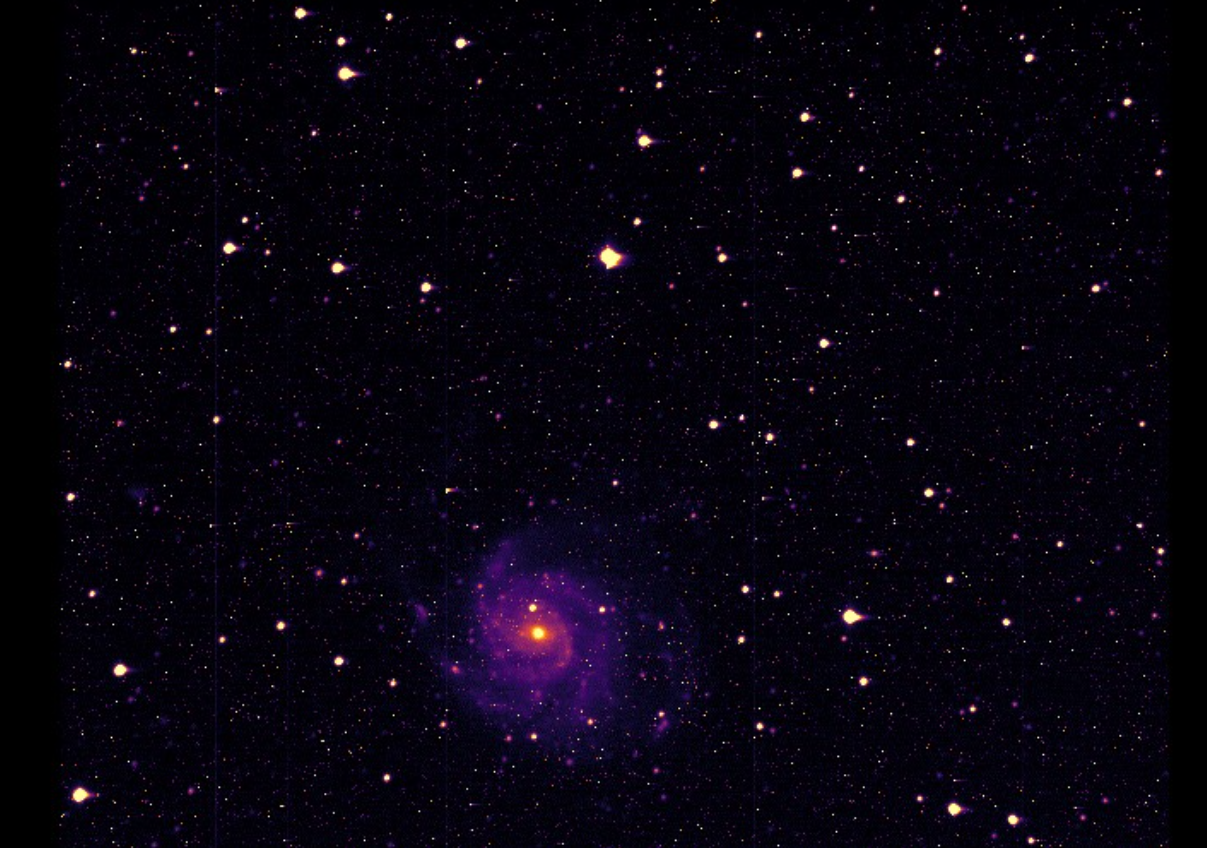
YouthAstroNet is a program created by the Harvard-Smithsonian Center for Astrophysics and funded by the National Science Foundation. It allows students to operate MicroObservatory robotic telescopes located in Amado, Ariz. and Cambridge, Mass., from an electronic device of their choice. To recruit, Harvard University sent letters during August 2025 to libraries and schools about the program and how to sign up. Walton & Tipton Township Public Library discovered in November 2025 that it was one of the programs given that chance.
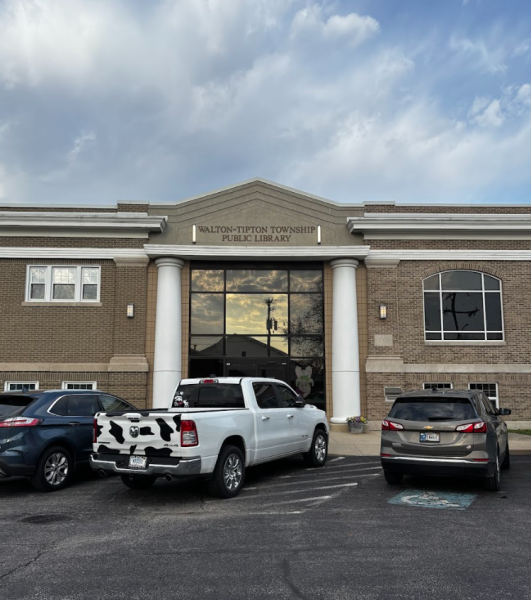
“I got involved by applying for the program after receiving the email,” Kristi Hileman, director and reference librarian, said. “Then, I waited to find out if the Walton & Tipton Township Public Library was chosen as a YouthAstroNet site. Once we were, I began marketing for student participation. I was hoping for 10, but was amazed that 21 signed up and stuck through the entire program.”
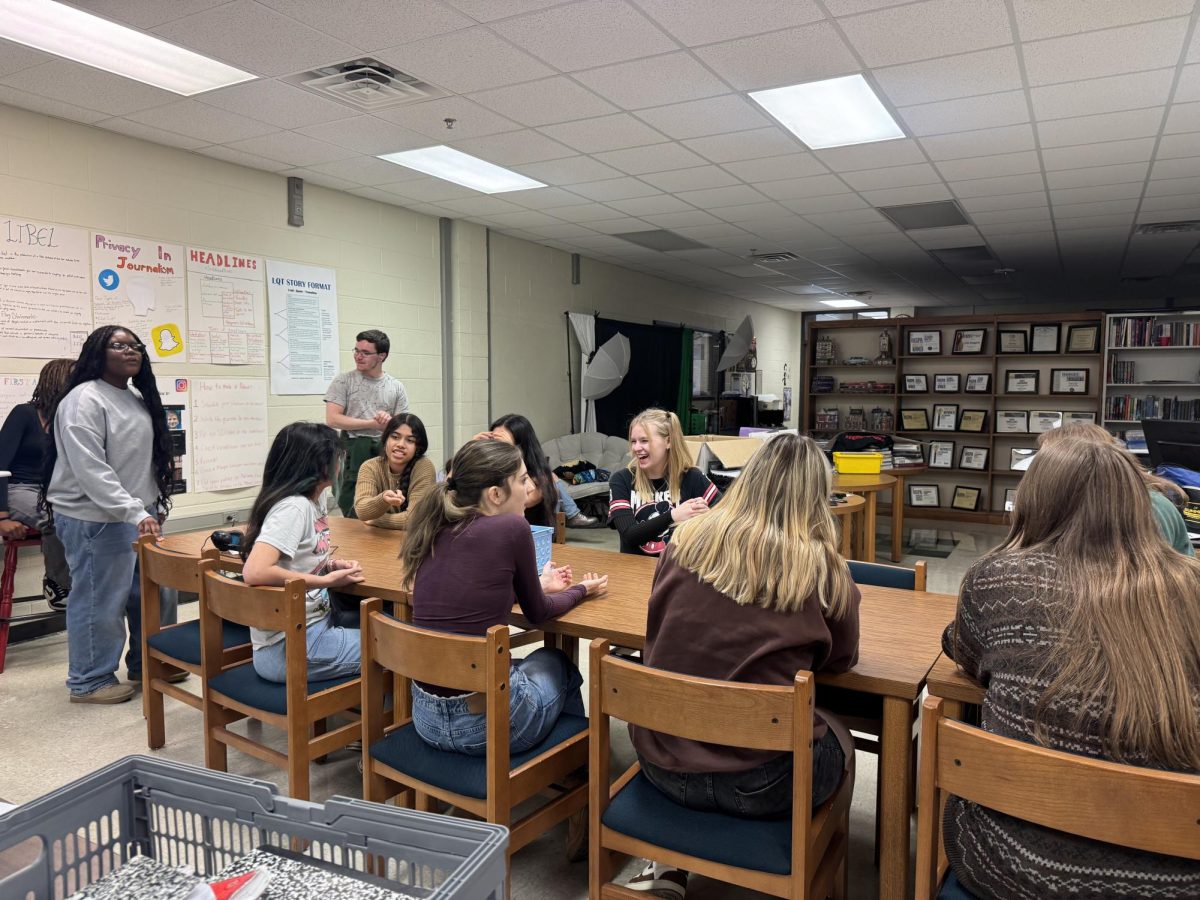
In addition to signing the library up, Hileman also coached the students through every lesson and activity on meet days, Thursdays, from 5-6 p.m. The students came from a combination of local schools, such as Caston Schools, Lewis Cass Schools, Pioneer Schools and Logansport High School. Some homeschoolers even participated. The age range was just as flexible as the education.
“The program can focus on any age group,” Hileman said. “However, I specifically chose 10-18 years of age because I believed that age range would appreciate the science behind the photography better. I also thought students who were interested in the robotic technology side of the program would have a better grasp of the situation than students younger than 10.”
Most of the participants were between the ages 10-12. When communicating with Hileman, she expressed her desire to have more teenagers between the ages of 15-18 join, but nonetheless, she was pleased with the outcome this year, which I agree with. There’s no age limit to curiosity.
What struck me about the YouthAstroNet program was how surprisingly unserious it was. I went in expecting a lecture and deadlines, but got a variety of activities instead. Such activities included molding whatever space-themed thing we wanted out of clay, coming up with a story for our photos with complete creative freedom and meeting an employee from NASA.
It connected me with something we lose track of as we mature into adults: childlike wonder. That pure curiosity and disregard for the implausible, the reason why so many kids say they want to be an astronaut when they grow up, is what this program fosters. It can be seen in the projects, the people and even just the ideas themselves. Space indulges inquisitiveness and what it presents itself as is up to us.
“Initially, I was interested due to personal reasons,” Hileman said. “I love astronomy and I am an astrophotographer. I was also interested because I knew there was nothing like YouthAstroNet in this area for students to do. As a STEM program, it was a way for students to gain a better understanding of the universe while having fun. Learning often makes a stronger impact on a child when it’s done while having fun.”
What stood out to me was that the sense of creativity I experienced wasn’t incidental, but embedded in the program’s design. Activities that felt playful on the surface were part of a larger effort to make complex scientific ideas accessible beyond traditional classroom settings.
According to YouthAstroNet’s site, their core mission is to expand the YouthAstroNet program so that instructors and youth across the country can find inspiration in creating and responding with their own cosmic questions. They also hope to assist young people in developing their confidence and sense of self as capable scientists through individual engagement in real-world inquiry, bolstered by special access to the Center for Astrophysics | Harvard & Smithsonian’s resources.
“I believe the core mission was for students to gain a better understanding of exactly how expansive our solar system is,” Hileman said. “I also believe it gives students an opportunity to learn how scientific studies make a difference in how we view the world. Science exists in many forms and this program provided students with a chance to learn how people develop robotic telescopes, how those telescopes function and how the telescopes are capable of taking photos of galaxies 40 million light-years away. To me, that’s beyond comprehension. Our solar system is so vast that it makes me wonder if we’ll ever be able to explore everything that’s out there.”
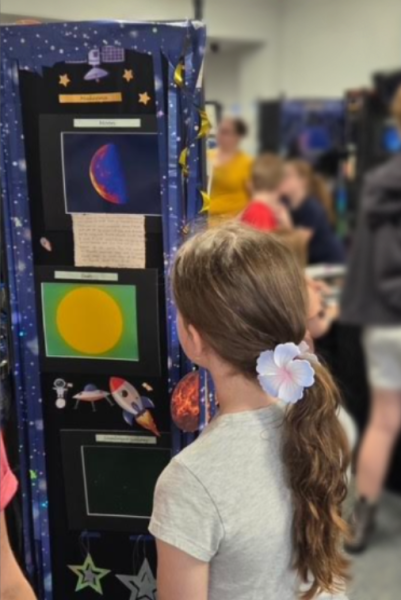
The objective of the smaller activities was to build up to assembling a display. Students were required to take two photographs personally developed and edited, write whatever they wanted about the photos they chose and set it all up on a panel board. For the arrangement, the exhibit followed a theme.
“Themes were up to the individual sites,” Hileman said. “Some didn’t choose any theme. I chose Dark Matters: Guardians of the Galaxies because I thought it sounded fun. Dark matter is space and no matter what object a student chose to photograph, he or she was taking a photo of a galaxy. Therefore, the students were always exploring a galaxy, whether ours – the Milky Way – or another, like the Sombrero Galaxy.”
Each individual’s interpretation was showcased March 31, 5-7 p.m. in the Community Room of the library. There, food was served, mementos and certificates were handed out and additional materials were available.
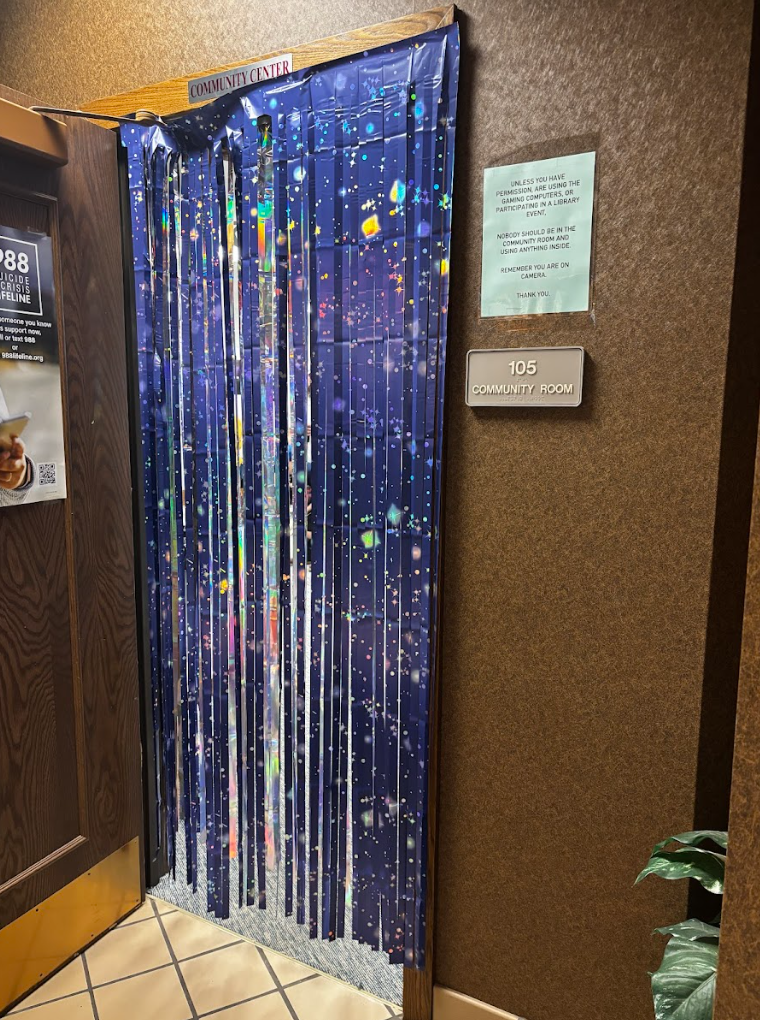
Spring Break was occurring the week before the display, so a lot of kids were out on vacation and unable to fully put everything up. The students created everything, but a lot of the photos were labeled and put on the panel boards by Hileman. The boards were difficult to decorate because the provided double-sided tape didn’t adhere well to the material. It all worked out, though, as no decorations or elements of participants’ displays fell off during the showing.
“The most challenging part was making sure the projects could be put together for the exhibit,” Hileman said. “I know it sounds weird, but I was so worried that the frames and decorations would not stay on the panel boards.”
Walking around and seeing the other students’ ideas was fascinating. That sense of wonder ran rampant throughout and every single one captured a unique creativity in their stories and photos.
“I thought they all were fantastic,” Hileman said. “I’m being serious with that answer because I loved each person’s creativity. One person could make the moon blue while another made the moon purple, pink and yellow. Everything was unique and provided an insight into how the creator thought. That’s what was important. No one thinks the same and understanding that is what makes this world such a profound place to live.”
Experiences like this feel limitless, but in reality, they depend on support that isn’t always certain.
In 2025–2026, federal funding cuts to agencies like the National Science Foundation (NSF) and National Institutes of Health (NIH) led to thousands of canceled or frozen programs. As a result, YouthAstroNet faces an uncertain future.
“If we could participate again, I would encourage students to take advantage of a free program that offers them a chance to explore space like a NASA astronomer would,” Hileman said. “Students could learn about nebulae and galaxies. There are endless opportunities and the program gives students a chance to forever be linked with one of the greatest research industries in history – NASA.”
It’s an uncertain reality, one that makes opportunities like this feel even more meaningful. Learning about the celestial expanse inspires creativity and exploration and for it to be suppressed is a restriction of students’ education and professionals’ full ability to metaphorically and literally reach for the stars.
We can be taught it’s no big deal, but that wonder will always be there. Space isn’t something that can be gatekept. Our access to its comprehensible knowledge may be withheld, but in a way, we will always know the incomprehensiveness of it, that feeling of wanting to know everything and nothing at once, of being both scared and amazed at the vastness around us, is something we won’t lose.
Maybe space was never meant to be understood, only explored. And maybe that’s enough.