On Apr. 16, Tomodachi Life: Living the Dream released for the Nintendo Switch systems. The game was originally announced on Mar. 27, 2025. At first no release date was given; the trailer only said “2026.” A few teasers were released following that, but they contained very little information about the game. Nearly a year after the first trailer, we finally got to know more.
On Jan. 29, 2026, Nintendo released a full 22 minute direct—three directs, technically, each for the American, British and Japanese regions—that detailed Mii creation, gameplay, events and gave us a little storyline with the characters of the island.
For starters, the Mii creator is much more advanced than that of Tomodachi Collection (released 2009) and Tomodachi Life (released 2013). In the early games, the hair sets are very limited with only eight natural colors to select from, and there are only six skin tones. Now, the creator has 108 hair colors and 16 skin tone presets. Unnatural skin tones can be chosen as well, so your Mii’s skin can be nearly any color you like. It also separates bangs and hair on the back of the head, allows you to flip hair direction, and has sub colors for hair.
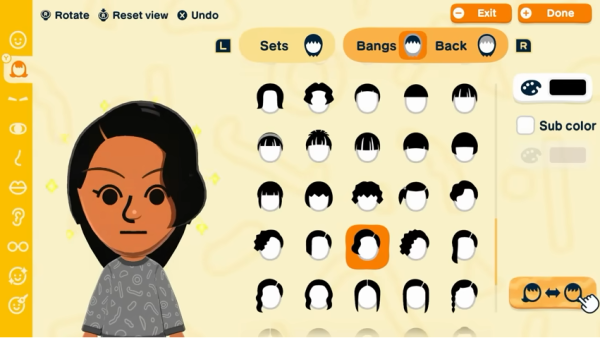
The Mii creator is much more expansive than just that. Every single togglable feature can be adjusted and moved wherever on the Mii’s face, which was not previously possible. In the earlier games, blush, face lines, freckles, etc. were all stationary. There’s also a new face paint feature that allows the player to draw anything they want onto their Mii’s face.
Mii customization goes way beyond just the facial features. You can change Mii clothing preferences to masculine, feminine or both. Miis can be nonbinary, which was not previously possible. Pronouns are adjustable and are not connected to gender, so you can have a female Mii with he/him or they/them pronouns and vice versa. Dating preferences are also adjustable for each Mii. You can make them straight, bi, gay or have no romantic orientation at all.
Gameplay wise, Living the Dream is much more interactive and inclusive than previous games. In Tomodachi Life, for example, Miis primarily just stay in their apartment. They may go to other Miis rooms, or to the beach, or to the park… but there isn’t much to do to interact with them. The only time you can do anything with a Mii is when you call them to their apartment or if they have a problem that needs solved. If there was a specific Mii you wanted them to be with, you just had to stick their apartments next to each other and hope something would happen.
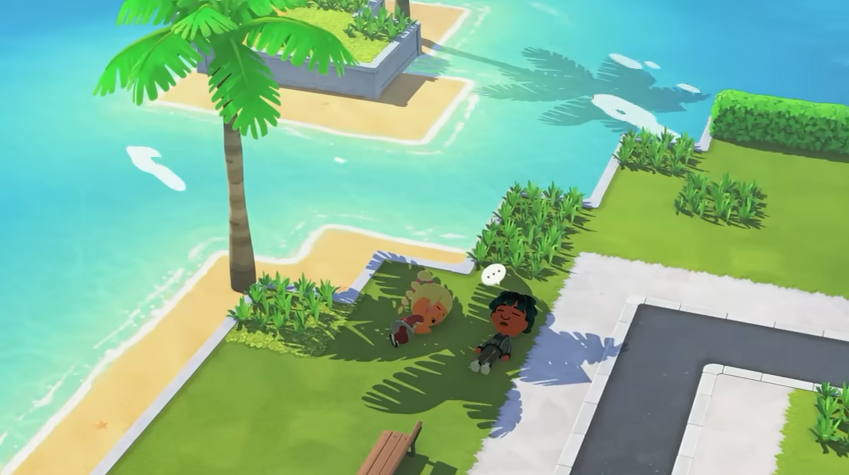
Now, Miis spend a lot of their time outside of their homes and on the island instead. You can pick up Miis and bring them to each other or to different objects on the island. They interact with pretty much everything! By forcing Miis together, you can get relationships in motion much faster.
The island structure is vastly different as well. The new island is fairly flat, deviating only for beach areas. The apartment building has been replaced by individual homes for each Mii. This makes room for a new feature: custom islands!
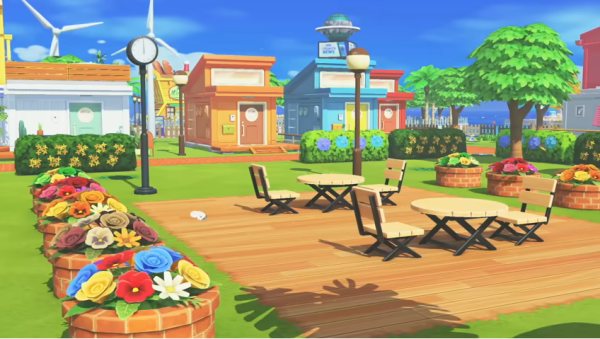
Players can expand the island, buy decorations and move buildings around to their liking thanks to Quik Build, a new building in the game. You can buy different decorations and place them wherever you’d like, from plants and fences to water sprinklers. This allows for some really extravagant and creative islands. Occasionally, a Mii will ask to decorate the island and share their idea for what should be placed where.
Similarly, players can create custom foods, pets, buildings, clothing and various other items with the new building Palette House. They’re made with the same editor as the Mii face paint. You can theme your entire island with changing exteriors and such.
Another big change from previous games to this one is Mii housing. Miis have individual homes rather than live altogether in an apartment building.
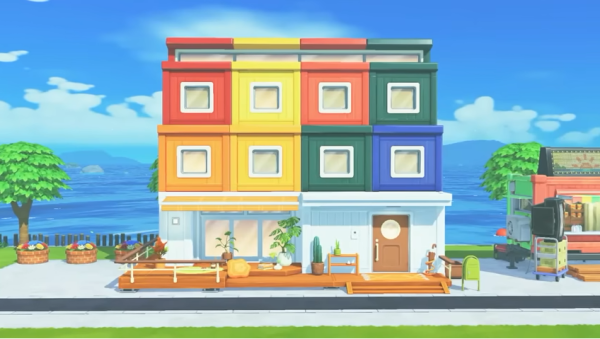
In Tomodachi Life, when two Miis in a romantic relationship get married, they move into a home together in a section of the island called “Mii Homes.” They can still visit their old apartments and hang out as normal. Other Miis can go over to their shared home as well.
On the other hand, in Living the Dream, a Mii doesn’t have to be married to live in a shared house. Miis can ask to move in with one another if they have a close enough friendship. Up to eight Miis can live together in one house.
Miis also can have a much wider range of personalities. There are still just 16 base personality types like the earlier games, but you can now give Miis the gift of a “Little Quirk.” Little Quirks are traits given to Miis that give them unique mannerisms. For example, a Mii may greet others enthusiastically or dismissively. A Mii may float instead of walk. An angry Mii may cry or break things around them. Anything is possible!
Much, much, much more is possible in Living the Dream than stated here. Some things are best experienced first hand! With the myriad of events and possibilities in this game, it can’t all be summarized.
As you play, one thing you should remember is that your Miis are not Sims. You do not get to choose their every move, decisions or how their relationships play out. They do all that on their own; they merely come to the player for advice. The fun is all in seeing what they decide to do on the island and with each other!