With a surge of new Sherlock Holmes adaptations premiering this year, including CBS’s “Watson” and The CW’s “Sherlock & Daughter,” and several more in development, such as Amazon Prime Video’s “The Young Sherlock,” Netflix’s “Enola Holmes 3” and the upcoming UK-filmed series “True Sherlock,” set for January 2026, now is an ideal time to revisit the ever-evolving Holmes universe and have a look back to see which customization of the greatest detective on earth is worthy to call itself superior.
Among the many portrayals, a handful have left a lasting impression, but none more than “Sherlock Holmes: A Game of Shadows.” For someone who values the canon of books being transferred into a film adaptation and is upset with huge changes, I should’ve hated it. Along with the shift in genre, it wasn’t on brand with the traditional Sherlock that history knows—a high-functioning sociopath—but rather depicted the detective as a manic mess with a genius intellect. It was a hard shift from the books I’ve read and other adaptations I’ve watched; still, it’s difficult not to be captivated by the movie as a whole.
“Sherlock Holmes: A Game of Shadows,” the second film of a two-part set, immediately topped the North American box office the weekend it was released, starting on Dec. 16, 2011. It didn’t stop there as it became the 12th-highest-grossing film worldwide, earning more than $543 million, at least $418 million more than its budget of $125 million. The show was a major commercial success for the director, Guy Ritchie, as well as Village Roadshow Pictures, Silver Pictures, Wigram Productions, Lin Pictures and Warner Bros. Pictures, the studios that served as the distributors.
The first movie, simply called “Sherlock Holmes” (2009), though a great film, did not amount to the title of greatest, which I’ve classified its counterpart as. Watching it will give you more context as to what’s happening, specifically at the beginning with Sherlock’s brief, and I mean brief, interaction with the love interest. But it’s not needed to understand what’s happening in the show. Just like Sherlock’s cases, the movies are distinct from each other, with only Sherlock, Watson and a few other side characters remaining the same.
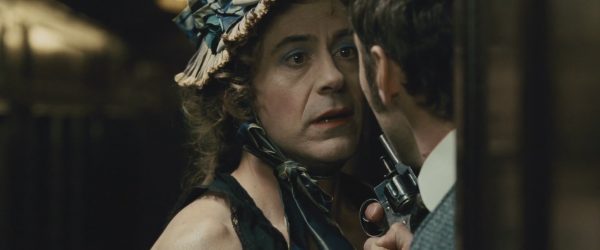
Starting the film, when the body of Austria’s crown prince is discovered, it appears to be a suicide. Detective Sherlock Holmes, played by Robert Downey Jr., however, concludes that the prince was killed and that the crime is only one element of a larger scheme created by Professor James Moriarty, played by Jared Harris, a malevolent genius. In the hopes of stopping Moriarty’s scheme before it can be carried out, Holmes and his partner, Dr. Watson, played by Jude Law, pursue him across Europe with the help of a Romani woman named Madame Simza, played by Noomi Rapace, whose life Holmes rescued. The plot is loosely inspired by author Conan Doyle’s “The Final Problem,” a short story about the confrontation between Holmes and his arch-nemesis, Professor James Moriarty. The confrontation itself is not the same, but the ending is.
The movie itself has many funny moments, but it’s definitely not a comedy. It has many heavy themes, such as the destructive power of modern warfare, the rivalry between genius and madness, commentary on late 19th-century capitalism, industrialization and class issues. Powerful, exploitative structures that favor the privileged at the expense of marginalized communities are criticized in the movie through the villain’s ambitious, catastrophic plot. Through the backdrop of Victorian London and the emergence of international conflict, power struggles and unbridled technological advancement are delicately woven into the story to reflect current worries as well.
In order to fit the story and look of “Sherlock Holmes: A Game of Shadows,” the characters’ characteristics are altered by the writers in this stylized, action-packed version. Still, the characters in question are easy to love. The way they were written, their lines and attitudes fit the different world the creators were trying to develop. It definitely helps that the actors loved their roles and understood their characters on a deep level. The facial expressions were on point, the lines were delivered well and there was amazing chemistry between the characters, so much so that the relationships between the characters are clear even when no words are even uttered.
Sherlock Holmes is unhinged in this film, but his lunacy is perfect. People as smart as him are often portrayed two ways: with no emotions or as being absolutely insane. Due to Doyle’s books, he’s portrayed as the former rather than the latter. This change in Sherlock’s character from the books could’ve gone horribly wrong, but RDJ’s incredible acting and Guy Ritchie’s phenomenal directing made the change so flawless that it felt like it was meant to be that way. To keep it brief, I’ll leave detailed descriptions out, but Moriarty was clever as always, Watson’s skill is top-notch and Simza kept things quite interesting.
Hans Zimmer, the composer for Guy Ritchie’s Sherlock Holmes, is a musical genius. He’s worked with Guy Ritchie on other movies and is known to be dedicated to his work. He has this ability to evoke powerful emotions through his unique soundscapes. Zimmer drew from Eastern European and Romani musical influences to reflect the film’s exploration of those cultures, aiming for an authentic “ethnic and rustic vibe” by recording local musicians and collaborating with soloists as if they were actors selecting a cellist, violinist and banjo player in the process. Through this process, he sought to embody Holmes’s “manic depressed genius.”
Creativity made this eccentric world alive, specifically from Guy Ritchie. He adapted the complex stories of Doyle into a vibrant and action-packed movie, emphasizing the special bond between Holmes and Watson and delivering thrills in his trademark “BOOM!!!” style and is rightfully commended for it. His movies go fast, but when paying attention, you’ll catch a lot of details that you wouldn’t be able to appreciate if you put it on as background noise. Excluding the small details, the next most unique craft Ritchie uses would be his use of slow motion and speed ramping, while everything is being covered by a variety of camera angles. He uses this technique in some of his other films, such as “King Arthur,” “The Man from U.N.C.L.E.,” “The Wrath of Man” etc., but it’s more pronounced in this one than any other.
Some critics believe that there wasn’t enough depth, that it got overshadowed by all the action. I would believe that to be true, too, if I didn’t realize the spectator is meant to focus on the quickness of it all, to question what comes next, not to ponder the past until it’s needed to solve the puzzle. The past is only meant to provide clues for what the future holds; it’s not meant to be dwelt on.